
Your mobility, our sustainable mission
Let’s build your sustainable mobility together
Next Mobility supports your company on the journey towards sustainable and practical mobility. We prioritize responsible, efficient, and tailored solutions that improve employee well-being while reducing your environmental impact.
Your challenges, our case studies
We adapt to your needs
The Belgian mobility budget offers a sustainable and tax-efficient alternative to company cars. Yet many organisations struggle with its complexity...
Clear, Sustainable and Practical
The Car Policy remains a cornerstone of corporate mobility in Belgium. Yet many are outdated, unclear or difficult to apply....
Smart Choices, Scalable Deployment
Installing EV charging stations is complex: fire safety, available power, building integration, connection costs… Many Belgian companies are unprepared for...
Write a Clear and Effective Tender
Selecting a mobility provider (electric vehicles, charging stations, MaaS tools, etc.) requires a clear, technical and objective tender. Companies often...
Managing Space and Electrification
Urban space for cars is shrinking, especially in Brussels (Good Move plan) and under new Flemish regulations. Fire safety, CoBrACE...
Electrification and Light Alternatives
Electric utility vehicles are evolving fast, but often don’t meet operational needs (weight, payload, cost, range, customisation). Meanwhile, alternatives like...

Supporting you
We’re here for you, at your own pace
Mobility Strategy Project Management
From strategic design to full implementation.
Operational Support for Mobility Policies
Hands-on support for deploying mobility policies within your organisation.
Mobility Training
Upskilling corporate mobility managers and HR teams.
Mobility Coaching
Guiding decision-makers and users through behavioural change.
Mobility Events
Organising awareness campaigns and engagement activities.
Mobility Workshops
Co-creating strategies and change plans with your teams.







Notre Promesse
Turnkey Mobility Solutions — We’re by Your Side Until It Works
We guarantee:
- A clear, realistic and actionable strategy: No forgotten slide decks — only projects that deliver results on the ground.
- End-to-end implementation with no surprises: We map out every aspect of your mobility project and see it through to completion.
- Simple internal management: Each solution is tailored to your organisation’s processes, teams and constraints.
- Outstanding user experience: We put people first — employees, decision-makers, social partners — and align all stakeholders towards successful change.


Co-founder
André
Driving teams towards successful sustainable mobility.

Senior Consultant
Benoit
Turning mobility into practical and sustainable solutions.

Consultant
François
Optimising your fleet for zero-emission mobility that works for people.

Co-founder
Nicolas
From data to action: shaping the mobility of tomorrow.
News & Inspiration
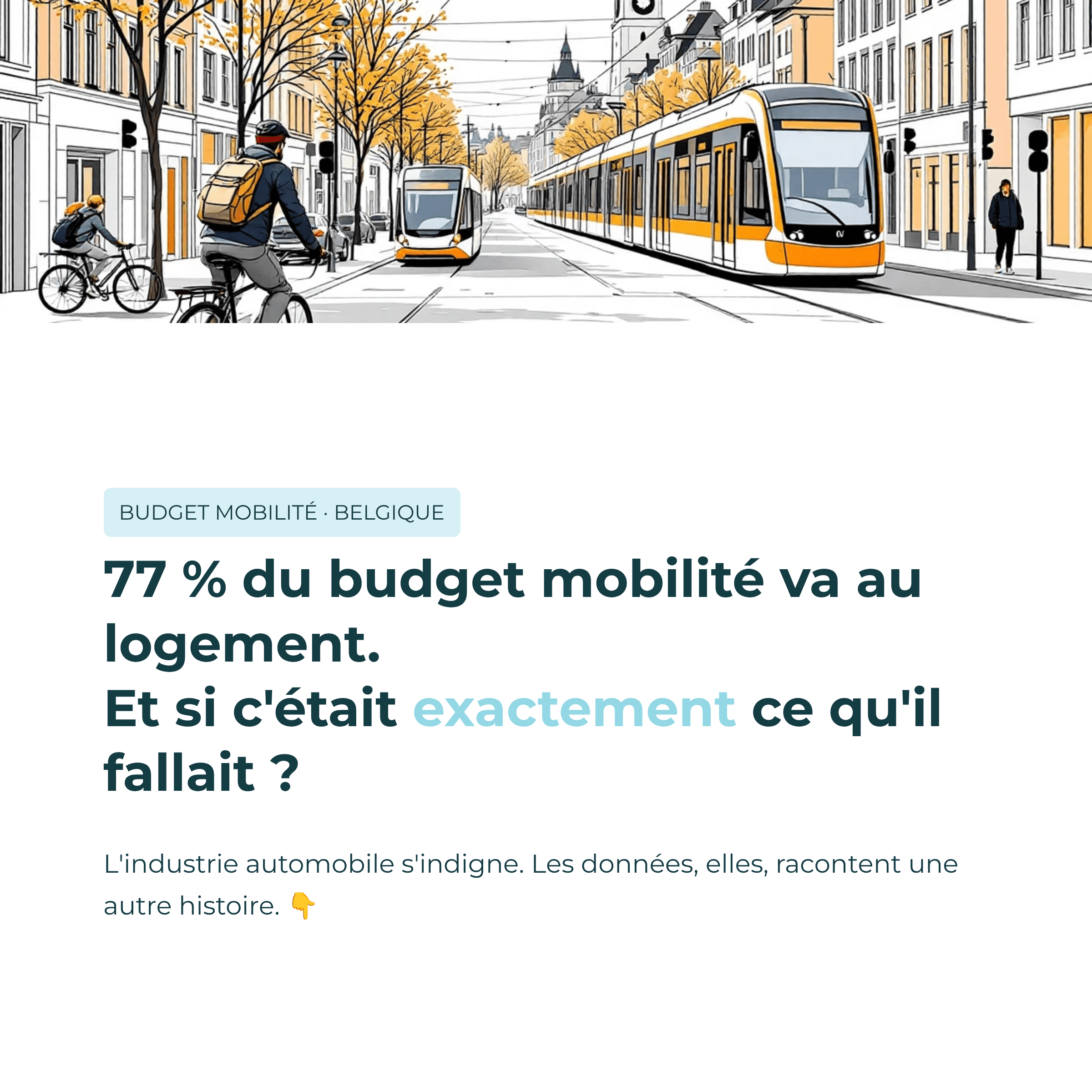
77% of the Mobility Budget Goes to Housing. What If That’s Exactly What We Need?
A clarification before we begin: I’m not anti-car. Cars have a role to play, and in many cases they remain...
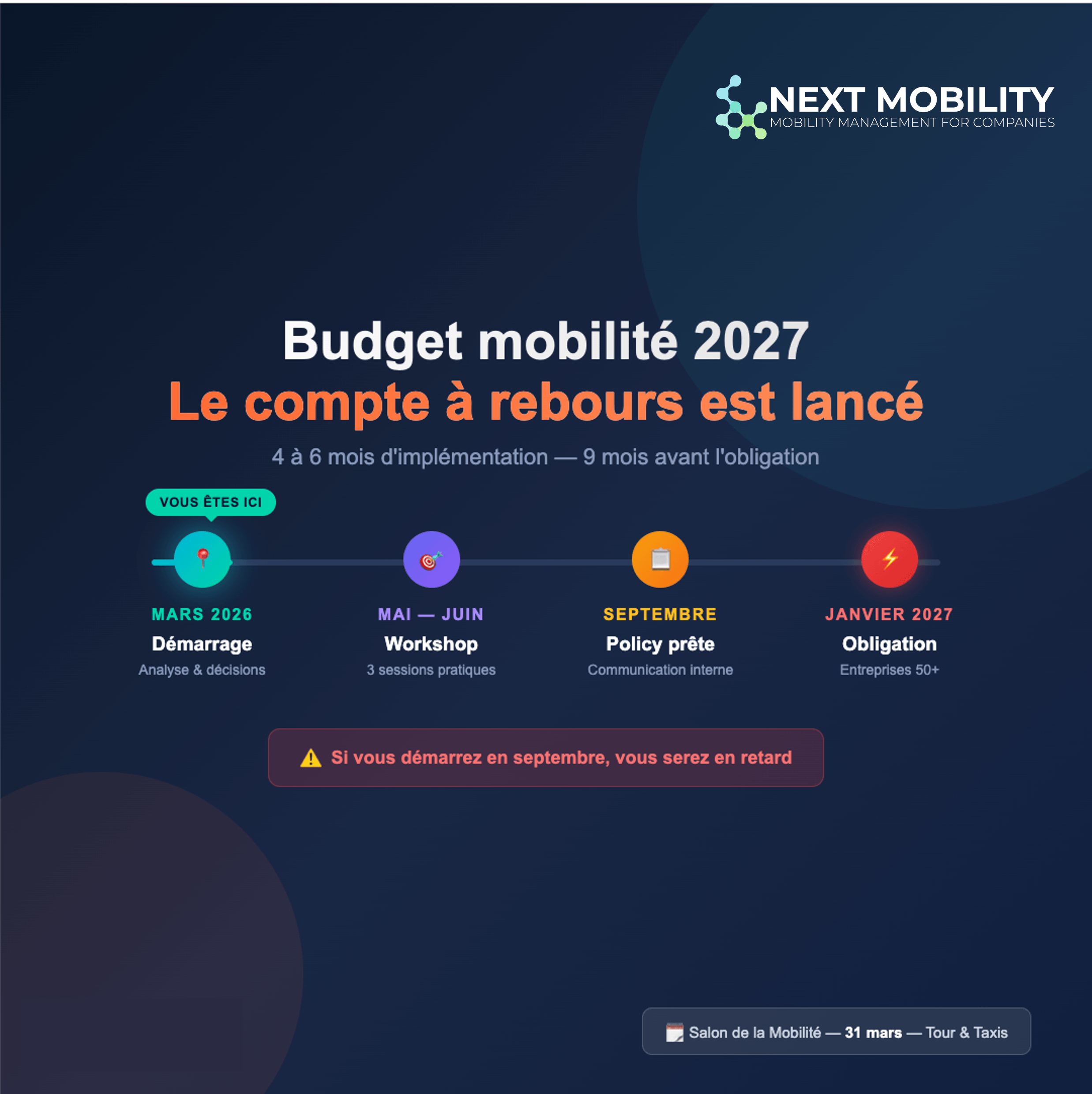
Mobility Budget 2027: 5 Reasons to Prepare Your Teams Now
January 2027 is nine months away. By that date, every Belgian company with 50 or more employees that offers company...
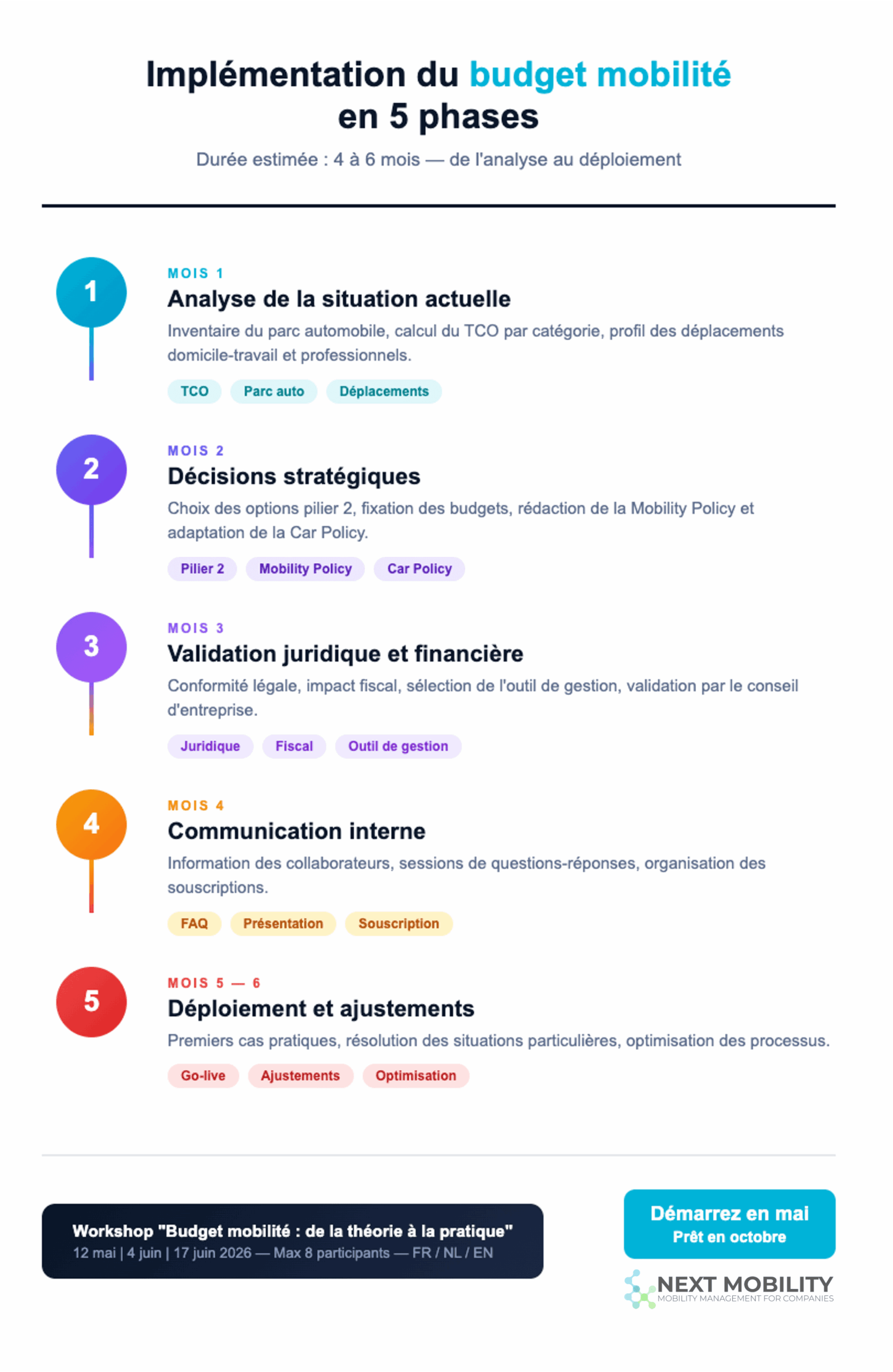
Workshop Mobility Budget: Implement in 1 day, leave with your documents
Not a training course. An implementation workshop. You build your Mobility Policy, your Car Policy and your checklist during the...
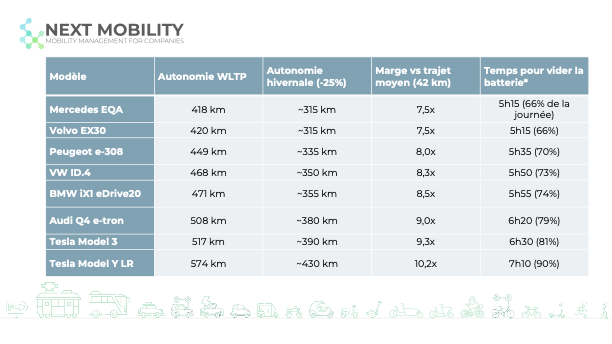
Can You Really Be EV Electro-Incompatible in Belgium in 2026?
“I can’t switch to electric.” That’s the phrase I hear most often in workshops with fleet managers and HR directors....
Mobility Budget: The 10 Questions Your Employees Will Ask You (and the Answers the Law Doesn’t Always Provide Clearly)
Belgium’s mobility budget becomes mandatory in 2027 for companies with 50+ employees, and in 2028 for those with 15-50 employees....
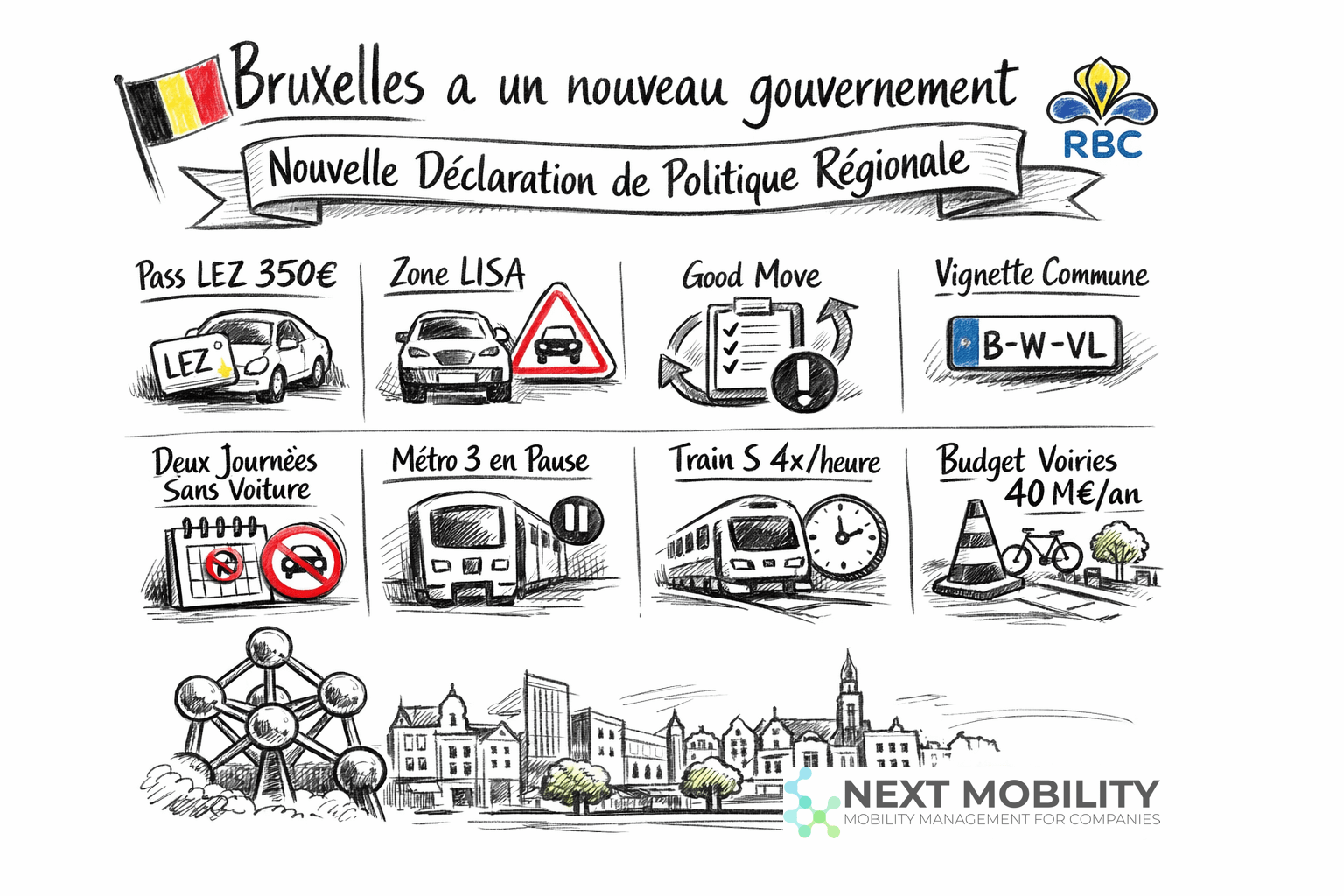
Brussels New Government: 10 Mobility Measures That Impact Your Fleet
The regional policy declaration of Brussels’ new government came out last week. Twenty-four pages that outline Brussels policy for the...


FAQ Sustainable Mobility in Business
How can you implement a sustainable mobility policy in your company?
Start with a mobility audit (fleet, commuting, costs, taxation). Then define clear goals (CO₂ reduction, HR attractiveness, cost optimisation), co-create a Car & Mobility Policy, plan internal communication and change management, and monitor results with key indicators.
How can you reduce the carbon footprint of commuting?
Promote active modes (cycling, walking), public transport, partial remote work, shared or electric vehicles, and internal awareness campaigns (challenges, incentives).
What are the benefits of the mobility budget for employees and organisations?
For employees: more freedom, access to sustainable options (bike, public transport, carpooling), better taxation and quality of life.
For organisations: lower fixed costs, greater HR flexibility, reduced emissions, stronger employer branding.
What multimodal mobility solutions can companies adopt?
Is it realistic to implement the mobility budget in 6 months?
Yes — with a clear framework, a defined Car & Mobility Policy from the start, and an experienced partner like Next Mobility. A phased rollout with the right tools ensures efficient implementation, even in complex environments.
Why work with mobility experts to manage your fleet and infrastructure?
Fleet and charging infrastructure management is complex and constantly evolving. Next Mobility helps you choose the right vehicles, charging solutions and software, comply with tax rules, and control costs.
Why choose Next Mobility instead of just using an app?
We’re a fully independent consultancy. An app is a tool — we help you define your mobility policy, select the right tools, engage employees, and ensure the solution meets your HR, tax, operational and environmental goals.
What do you offer for SMEs with limited budgets?
Is it really possible to electrify a utility fleet in Belgium today?
What are your legal obligations regarding mobility in Belgium?
It depends on company size and location:
- Federally, companies with 100+ employees must conduct a commuting survey every 3 years.
- In Brussels, companies with 100+ staff on one site must also develop a Corporate Mobility Plan (PDE).