

January 13, 2026 | Reading time: 10 minutes
The Urban Land Institute (ULI) recently published a landmark report on the link between sustainable mobility and commercial real estate. A topic that may seem distant from the daily concerns of Belgian and European businesses, but which is actually at the heart of tomorrow’s challenges.
Why? Because the mobility of a building’s occupants represents the largest share of its total carbon footprint. And with the arrival of the CSRD directive in Belgium and across Europe, companies must now account for these emissions in scope 3.
The Context: Why This Convergence Now?
Growing Demand for Walkable Neighborhoods
The numbers speak for themselves. According to the National Association of Realtors (2023), 79% of Americans value the possibility of living in a place where they can easily walk to other places and amenities.
A Smart Growth America study (2020) shows that 66% of Americans believe their communities would be improved by investing more in public transit.
This demand is not uniquely American. In Belgium and Europe, we observe the same trends:
- The enthusiasm for neighborhoods like Dansaert in Brussels, Het Eilandje in Antwerp, or Ghent city center
- The growing valuation of apartments close to metro/tram stations
- The success of new TOD (Transit-Oriented Development) neighborhoods like Tour & Taxis
Scope 3 Emissions: The Invisible Challenge
Most companies focus on their direct emissions (scope 1) and electricity consumption (scope 2). Yet, scope 3 emissions typically represent the largest share of total carbon footprint.
For a building, scope 3 emissions include:
- Employee commutes
- Visitor travel
- Deliveries and pickups
- Transport of construction materials
Concrete example: For an office building hosting 500 people of whom 80% drive alone, commuting-related emissions can represent 3 to 5 times the building’s direct emissions itself.
Regulatory Pressure Is Increasing
The CSRD (Corporate Sustainability Reporting Directive) progressively requires European companies to publish detailed information about their environmental impacts:
- 2025: Large companies already subject to NFRD (Non-Financial Reporting Directive) before 2024 (+500 employees)
- 2026: Other large companies (+250 employees)
- 2027+: Listed SMEs
Even companies not directly concerned will be impacted through their clients who will request ESG data for their own reporting.
The 5 Pillars of Sustainable Mobility (ModeScore)
ModeScore, a global certification organization, defines sustainable mobility around a building through 5 pillars:
1. Walking
Principle: Encourage pedestrian travel through quality urban environment.
In practice:
- Wide and well-maintained sidewalks
- Secure pedestrian crossings
- Appropriate public lighting
- Green infrastructure (trees, benches)
Belgian example: Brussels’ pedestrian zone transformed central boulevards into a pedestrian-priority area, significantly increasing commercial foot traffic.
2. Cycling and Micromobility
Principle: Encourage the use of bicycles and micromobility devices (scooters, monowheel, …).
In practice:
- Protected bike lanes
- Secure bike parking
- Charging points for e-bikes
- Showers and changing rooms in buildings
Belgian example: Ghent ranks 7th globally among bicycle-friendly cities (Copenhagenize Index 2025) thanks to exceptional cycling infrastructure.
3. Public Transit
Principle: Facilitate access to and use of public transportation.
In practice:
- Proximity to metro/tram/bus stations
- Real-time information screens in lobbies
- Transit passes for employees
- Seamless multimodal connections
Belgian example: TOD projects along Brussels’ S-network (Schaerbeek Formation, Delta, Forest Midi) directly integrate this logic.
4. Shared Vehicles
Principle: Reduce individual car ownership by promoting car-sharing.
In practice:
- Dedicated spaces for shared vehicles
- Partnerships with Cambio, Poppy, Free2Move
- Flexible parking policy (fewer private spaces)
Belgian example: Some new Brussels buildings offer 0.3 parking spaces per unit but with Cambio access, versus 1.5 spaces traditionally.
5. Electric Vehicles
Principle: Support the transition to electric mobility.
In practice:
- Charging stations in parking areas
- Properly sized electrical infrastructure
- Reserved spaces for electric vehicles
Belgian example: The Brussels Region now requires charging points in all new construction with car parking.
Concrete Real Estate Amenities
For Cycling and Micromobility
Secure Bicycle Storage
According to ModeScore, bicycle storage design is as important as quantity. Key elements are:
✅ Generous sizing
- Accommodate a significant percentage of occupants
- Plan for evolution (cargo bikes, larger e-bikes)
✅ Security and comfort
- Optimal lighting
- Video surveillance system
- Access control
- Adequate ventilation
✅ Accessibility
- Compliant with standards for people with reduced mobility
- Easy access without stairs
- Automatic doors
✅ Equipment
- Charging points for e-bikes
- Basic repair tools
- Bike pump
Estimated cost: 1 secure bike parking space = €500-800 versus €15,000-25,000 for an underground car space.
Showers and Changing Rooms
For office buildings, showers encourage cycling.
Measurable impact: A Virginia Tech study conducted in the Washington DC region demonstrates that employees with access to showers, lockers, and bike parking at work have a 4.86 times higher probability of cycling to work compared to those without any cycling infrastructure (Buehler, 2012).
Additionally, a British Council for Offices survey reveals that 38% of office employees would consider cycling to work if their workplace offered better facilities.
Recommended amenities:
- Separate men’s/women’s showers and shower for people with reduced mobility
- Secure lockers
- Hair dryers
- Mirrors and electrical outlets
Recommended ratio: 1 shower per 50 occupants in office buildings.
Green Infrastructure
Trees and green spaces around buildings significantly improve the quality of active travel trips.
Benefits:
- Summer shade (crucial during heat waves)
- Reduction of urban heat island effect
- Improved air quality
- Visual attractiveness
Investment: A mature tree can reduce ambient temperature by 2 to 8°C within a 10-meter radius.
For Public Transit
Real-Time Information (RTI) Screens
Installing RTI screens in building lobbies offers several advantages:
For occupants:
- Reduced wait anxiety
- Better trip planning
- Increased public transit use
For the owner:
- Strong signal of sustainability commitment
- Commercial argument for prospective tenants
- Moderate cost (€2,000-5,000 per installed screen)
Example: Casa Arabella in Oakland, California installed RTI screens in its lobby, contributing to 45% public transit usage among residents.
Transit Passes
For residential:
Some developers include transit passes (STIB/De Lijn/TEC) in charges, particularly for parking-free units.
Advantage: This allows reducing required parking ratio, generating significant savings (€15,000 to €25,000 per unbuilt parking space).
For offices:
In Belgium, transit passes remain 100% deductible for employers and constitute a non-taxable benefit for employees.
For Cars
Flexible Parking Policy
The parking revolution is underway. More and more cities are reducing or eliminating mandatory parking minimums in new real estate projects.
In Belgium:
- Brussels: CoBrACE quota with parking maximums (not minimums)
- Ghent: drastic reduction of minimums for TOD projects
- Antwerp: differentiated parking policy based on public transit proximity
Innovative strategies:
1. Differentiated paid parking
- 1st car: €100/month
- 2nd car: €150/month
- Car-free: €50/month rent reduction
2. Car-sharing spaces
- 2-3 Cambio/Free2Move spaces
- Reduces need for private cars
- Studies show 1 shared car can replace 8-10 private cars
3. Shared parking
- Offices + residential = optimization
- Offices use during day, residents during night
Electric Charging Stations
Growing obligation: More and more regions require charging points in new construction.
Brussels Region (since 2023):
- 1 charging point per 5 parking spaces (buildings +10 spaces)
Cost:
- 11kW charging station: €1,500-2,500 installed
- Electrical infrastructure: €500-1,000/pre-wired space
ROI: Increased attractiveness + regulatory anticipation + asset valuation.
Inspiring Case Studies from ULI Report
The Underline (Miami, Florida)
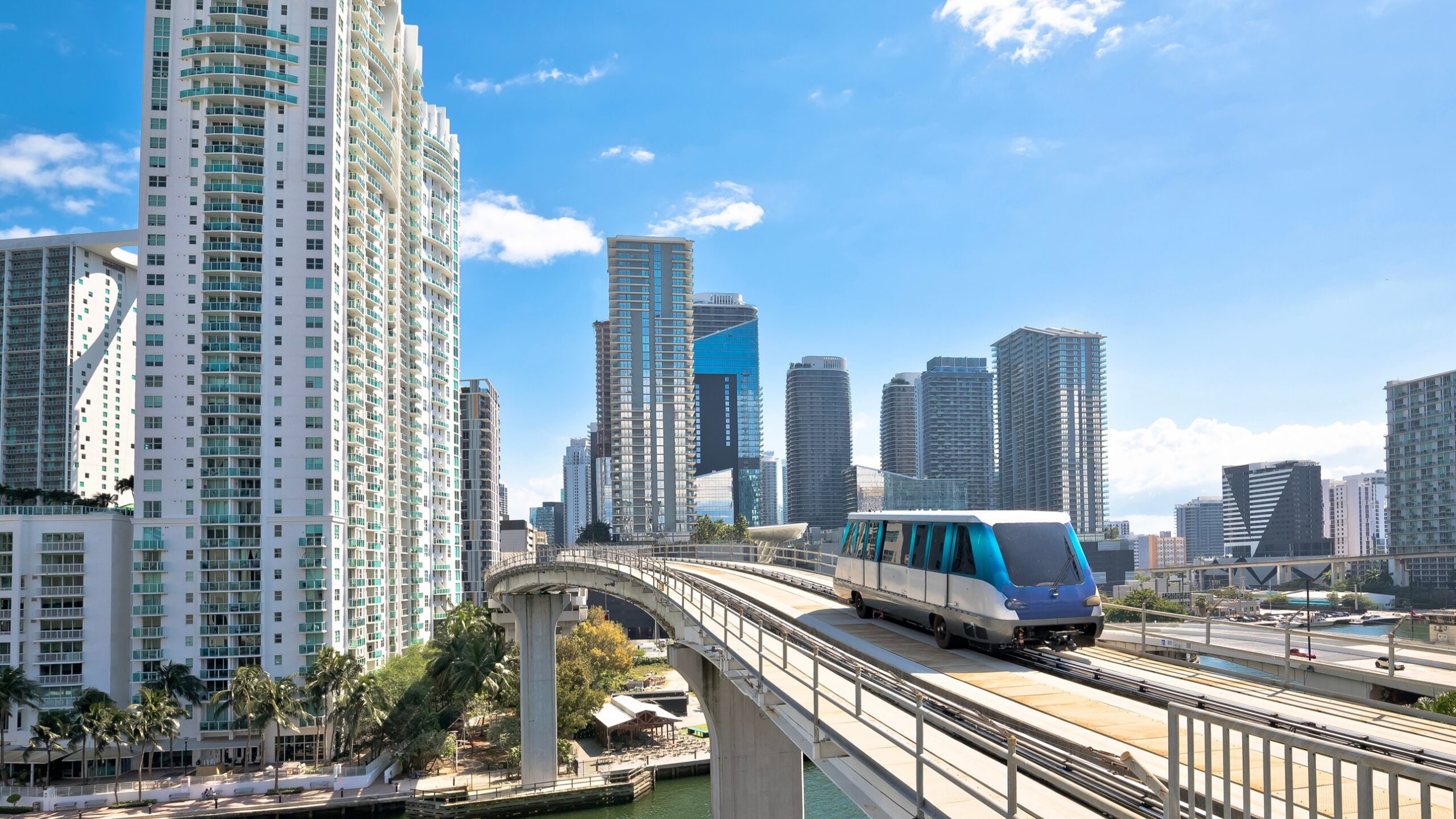
The project: Transformation of the space beneath Miami’s elevated Metrorail into a 16 km (10-mile) linear park.
Financing: Public-private partnership
Achievements (2021-2024):
- 4 km built to date
- 2 million annual visitors
- 18 new businesses opened
- $50 million annual economic impact
- $3 billion new taxable value generated
Real estate impact:
The Link at Douglas project, adjacent residential development:
- Reduces parking to 0.5 spaces per unit (versus 1.5 standard Miami)
- Construction savings: ~€10,000 per unit
- Reinvestment in sustainable infrastructure
- 100% leased in 4 months for first tower
Key quote: “Properties now advertise ‘on The Underline’ as a selling point. We’ve transformed what was a nuisance into a real residential asset.” – Patrice Gillespie-Smith, COO Friends of The Underline
MiLine Miami (Miami, Florida)
The project: Mixed-use development along the Ludlam Trail (former railway converted to 9.7 km path).
Particularity: The developer (ZOM Living) invested $3 million in constructing the trail itself.
Features:
- 1,000 units (3 phases)
- 2,000 m² retail
- 396 m trail built by developer
- Bike parking: €15/month versus €50/month car (€100 for 2nd car)
Impact: Private investment in public infrastructure can create significant real estate value while benefiting the community.
PENN DISTRICT (New York)
The project: Redevelopment of 93,000 m² around Penn Station, the largest station in the western hemisphere (600,000 passengers/day).
Developer: Vornado Realty Trust
Investments:
- Creation of Plaza33 (pedestrian space with greenery)
- Modernization of 51,000 m² offices
- Improvement of multimodal access (14 subway lines + regional trains)
Impact: Transformation of a chaotic transit hub into an attractive urban destination, significantly increasing the neighborhood’s real estate value.
Future development rights: Additional 93,000 m² authorized, conditional on market demand.
Application to Belgian and European Context
Existing and Future TOD Projects
Brussels:
- Tour & Taxis: urban redevelopment integrated with tram project
- Reyers: future multimodal hub (metro + tram)
- Delta: densification around metro station
- Schaerbeek Formation: TOD project along S-network
Ghent:
- Oude Dokken: port reconversion emphasizing active mobility
- Densification around Sint-Pieters Station
Antwerp:
- Nieuw Zuid: new pedestrian and cycling neighborhood
- Grondvesten: city-port reconnection via tram
Opportunities for Belgian and European Developers
1. Valorize public transport proximity
An apartment within 500m of a metro station sells on average 10-15% more than a comparable apartment further away.
2. Reduce parking costs
In Belgium, building a parking space costs:
- Outdoor parking: €5,000-8,000
- Underground parking: €15,000-25,000
- Automated parking: €25,000-35,000
20% reduction in spaces = significant savings for reinvestment.
3. Anticipate CSRD
Companies seek well-connected offices to reduce their scope 3 emissions.
A building offering:
- Direct metro/tram access
- Complete cycling infrastructure
- Mobility services
…can position itself as “CSRD-ready” and attract premium tenants.
4. Public-private partnerships
Belgian authorities seek private partners to activate:
- Stations
- Underutilized public spaces
- Well-connected brownfield sites
Example: SDRB project calls in Brussels explicitly favor projects integrating sustainable mobility.
Favorable Regulatory Framework
Brussels Region:
- Regional Mobility Plan (Good Move) encourages quiet neighborhoods
- Tax deductions for cycling facilities in buildings
- Mandatory charging points in new construction
Flemish Region:
- “Fietssnelwegen” (cycle highways) program connecting cities
- Subsidies for secure bike parking
- Mobility integration in environmental permits
Walloon Region:
- FAST plan (soft mobility)
- Cycling infrastructure subsidies
- RAVeL points (Autonomous Network of Slow Paths) to be valorized
Five Key Lessons for Belgium and Europe
1. Public-Private Partnerships (PPP) Are Essential
The success of projects like The Underline rests on close collaboration between:
- Public authorities (infrastructure, regulation)
- Private developers (development, activation)
- Associations (animation, maintenance)
In Belgium: Tools exist (SDRB, Citydev, AG Vespa in Flanders) but must be activated more systematically.
2. Financial Incentives Work
For residents:
- Included transit passes
- Rent discounts for car-free
- Car-sharing access
For developers:
- Regional grants
- Density bonuses
- Reduced urbanization charges
3. Parking Regulation Must Evolve
Shifting from minimums (building obligation) to maximums (limitation) radically changes the economic equation.
Brussels is pioneering with the parking component of CoBrACE.
Goal: Free up land and budget for more sustainable mobility infrastructure.
4. Design Influences Behavior
A beautiful well-maintained green space encourages walking.
Clean modern showers encourage cycling.
Real-time information screens reduce public transit anxiety.
Investing in quality sustainable mobility amenities = investing in their effective use.
5. Accessibility and Equity Are Central
A successful TOD project must be accessible to all:
- People with reduced mobility
- Families with children
- Elderly people
- Low-income households
Gentrification risk: TOD projects can increase real estate prices and exclude already established populations.
Solution: Include social/affordable housing in TOD projects, as the Brussels Region already partially mandates (minimum 25% social housing in new projects over 3,500 square meters).
Conclusion: A Strategic Opportunity for Belgian and European Players
The Urban Land Institute report demonstrates that integrating sustainable mobility into real estate projects is not just about environmental responsibility. It’s an economic opportunity.
For developers, this means the following advantages:
- Reduced construction costs (less parking)
- Asset valuation (transport proximity)
- Market differentiation
- Regulatory anticipation (CSRD)
For tenant companies, this means the following advantages:
- Reduced scope 3 emissions
- Employee attractiveness (quality of life)
- CSRD compliance
- Brand image
For communities, this means the following advantages:
- Neighborhood revitalization
- Congestion reduction
- Air quality improvement
- Territory attractiveness
Belgium and Europe have considerable assets to succeed in this transition:
- Dense public transport network (among Europe’s best)
- Developed cycling culture (Ghent, Antwerp, Leuven)
- Compact dense cities (ideal for active mobility)
- Rapidly evolving regulatory framework
Scale is still missing. Examples exist but must multiply to truly transform our cities.
💬 Next Mobility Supports You
Are you a real estate developer, investor, or company seeking to integrate active mobility into your projects?
Next Mobility can help you:
- Analyze your sites’ mobility potential
- Design an adapted mobility strategy
- Quantify economic and environmental impacts
- Implement concrete solutions
📚 Sources
- Urban Land Institute (2025). Sustainable Mobility and Real Estate: Opportunities for Creating Lasting Development Value. 22 pages.
- Buehler, R. (2012). Determinants of bicycle commuting in the Washington, DC region: The role of bicycle parking, cyclist showers, and free car parking at work. Transportation Research Part D: Transport and Environment, 17(7), 525-531.
- British Council for Offices (2019). Research on workplace cycling facilities.
- ModeScore (2025). Certification framework for sustainable transportation in buildings.
- National Association of Realtors (2023). Community and Transportation Preferences Survey.
- Smart Growth America (2020). Public Opinion on Transportation Investment.
- Copenhagenize Index (2025). Global Rankings of Bicycle-Friendly Cities.
Published January 13, 2026
Author: Nicolas Verstraete, Corporate Mobility Expert
Next Mobility