

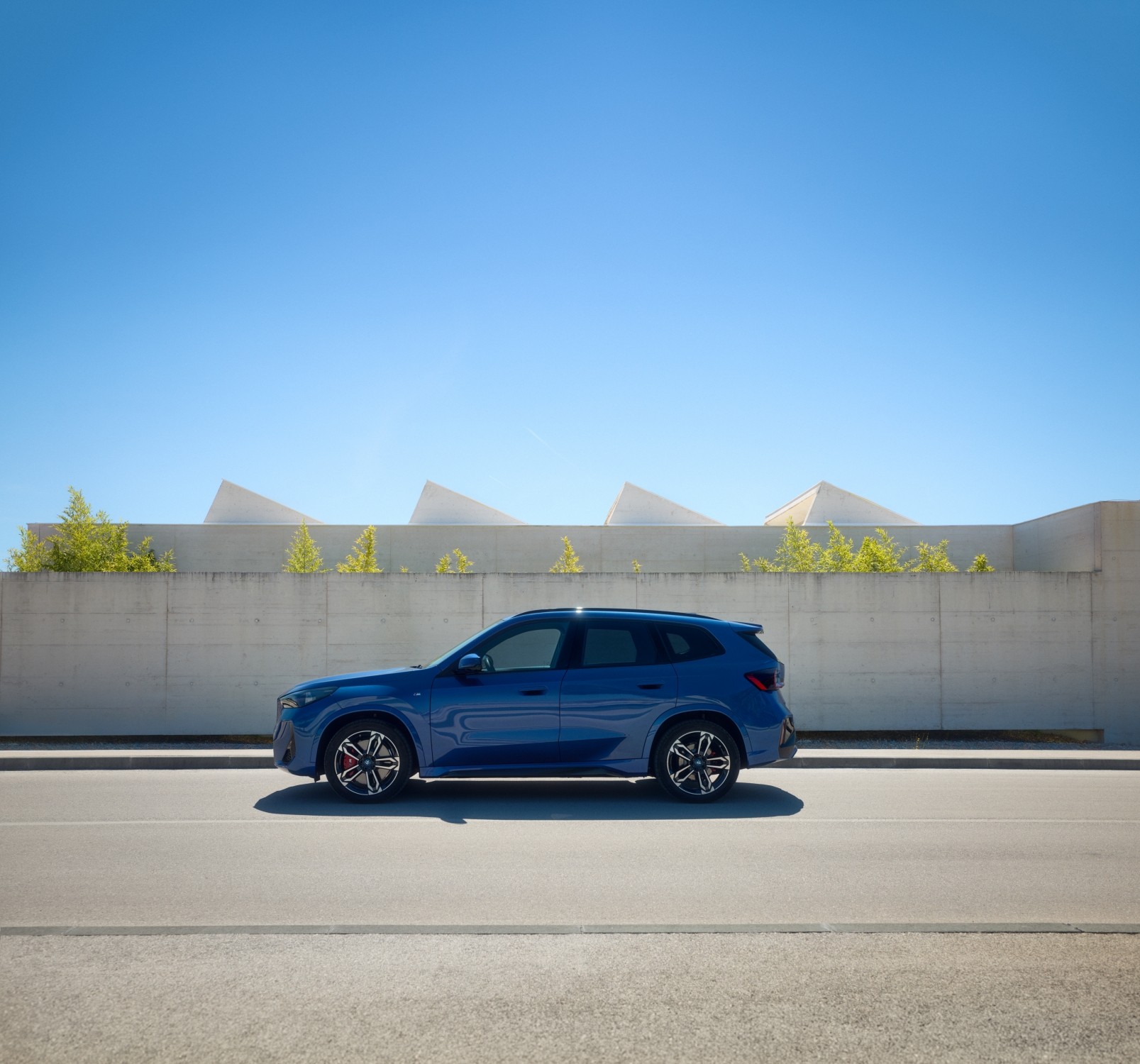
With 44,731 registrations in 2025, BMW retains its crown as market leader for the fifth consecutive year in Belgium. Behind these figures lie financial and strategic mechanisms that every fleet manager should understand.
BMW once again finished at the top of the Belgian automotive market in 2025, despite an 11.30% decline in sales in an overall market down 7.47% (414,771 registrations according to FEBIAC). This performance masks a remarkably effective industrial and commercial strategy, particularly among corporate fleets.
The Numbers Speak
In 2025, BMW registered 44,731 vehicles in Belgium, maintaining a comfortable lead over its competitors:
- Volkswagen: 38,770 units (-8.42%)
- Mercedes: 30,490 units (-3.51%)
- Audi: 28,094 units (-13.98%)
Source: FEBIAC, 2025 annual figures
But at the model level, the dominance becomes even more striking: the BMW X1 (all powertrains combined, including the electric iX1 version) is the most registered vehicle in Belgium across all segments, with 15,270 units. This compact SUV alone accounts for one-third of the brand’s sales in the country.
Even more revealing: over 80% of registered X1s are registered in corporate names, and 60% are electric iX1s (the 100% electric variant of the X1).
Sources: La Libre, “BMW leader, Tesla in free fall” (02/01/2026), Link2fleet, “Belgian automotive market analysis Q1 2025” (22/04/2025)
The German Trio: Three Strategies, Three Results
While BMW, Mercedes and Audi form the top three of the Belgian market, their performances differ significantly. Understanding these differences illuminates the mechanisms of the fleet market.
BMW: The Balancing Act
- Complete and mature electric range
- Massive electrification strategy (76% electric vehicles)
- Premium but accessible positioning (“aspirational”)
- Structured fleet services and aggressive discounts
Mercedes: The Premium Dinosaur in Difficulty
Despite a theoretically complete range like BMW’s, Mercedes shows the least pronounced decline of the premium trio (-3.51%), but stagnates in volume and market share. Several factors explain this relative underperformance:
- Too “status-oriented” image: The E-Class and S-Class remain associated with executives, creating friction in modern fleet policies seeking to eliminate hierarchical distinctions
- Late electrification: The EQA and EQB arrived later than the iX1/iX3, and the EQE/EQS are priced too high for fleet volume
- Less aggressive pricing: Mercedes fleet conditions are reportedly less competitive than BMW’s for large accounts
- Unfavorable Belgian taxation: Mercedes high-end thermal models particularly suffer from high BIK (Benefit in Kind) rates
Result: Mercedes retains a loyal customer base (executives, professionals) but loses ground on fleet volume against BMW.
Audi: The Incomplete Range
Audi shows the most pronounced decline (-13.98%) for a structural reason: unlike BMW, Audi offers only a few electric models (Q4 e-tron, Q6 e-tron, e-tron GT) where BMW covers its entire ranges.
In a Belgian fleet market where electrification has become unavoidable (taxation), this gap is paid in cash. Fleet managers who want range consistency naturally turn to BMW which offers electric versions of the X1, X3, 3 Series, 4 Series, 5 Series, etc.
Sources: La Libre, “BMW leader, Tesla in free fall” (02/01/2026)
Mechanism #1: Mastering Residual Value
BMW’s secret in the fleet segment largely rests on an often misunderstood financial mechanism: high residual value.
In a leasing contract, what determines the monthly cost is not the purchase price of the vehicle, but the expected depreciation over the contract period. A vehicle that retains 50% of its value after 4 years will be cheaper in monthly leasing than a vehicle that only retains 35%, even if its list price is higher.
Concrete example:
- Vehicle A: Price €45,000, residual value 40% (€18,000) → Depreciation €27,000
- Vehicle B: Price €40,000, residual value 30% (€12,000) → Depreciation €28,000
Over 48 months, vehicle A (more expensive at purchase) will be cheaper in monthly leasing.
BMW has invested massively to maintain high residual values on its fleet models:
- Recognized manufacturing quality
- Dense distribution network (essential for resale)
- Structured trade-in programs with long-term lessors
- Stable premium brand image over time
This strategy allows BMW to offer competitive rental rates despite list prices higher than the competition.
Mechanism #2: Aggressive Fleet Conditions
Premium manufacturers like BMW apply a differentiated pricing policy according to volumes. For large fleets (typically 50+ vehicles), discounts can reach or exceed 20% of the list price.
These conditions generally include:
- Significant volume discounts (up to 25% on very large accounts)
- Dedicated services: dedicated fleet managers, priority hotline, single point of contact
- Extended warranties and maintenance packages included
- Contractual flexibility: early replacement options, integrated fleet management
- Training programs for electric driving and new technologies
- Administrative support: fuel/charging card management, detailed reporting
These advantages create a lock-in effect: once a fleet is equipped with BMW, changing brands means rebuilding the entire commercial relationship and internal processes (team training, new procedures, etc.).
Mechanism #3: Strategic Electrification
BMW has taken a decisive lead by anticipating the electric shift in the Belgian fleet market, imposed by company car taxation.
The numbers speak for themselves:
- 76% of BMWs sold in Belgium are fully electric (October 2025)
- 20% of ALL electric cars registered in Belgium (January-October 2025) wear a BMW or MINI badge
- The BMW Group (BMW + MINI) is the top seller of electric vehicles in Belgium
Sources: Fleet.be, “Registrations in October 2025” (03/11/2025), AutoScout24, “BMW remains at the top” (13/11/2025)
This strategy aligns perfectly with Belgian company car taxation:
- BIK (Benefit in Kind) reduced for electric vehicles
- Tax deductibility maintained at 100% for zero-emission vehicles
- Gradual fleet electrification obligation (100% by 2026 for new orders)
By offering high-performance electric versions of its flagship models (iX1, i4, iX3, i5, iX), BMW has transformed a regulatory constraint into a competitive advantage.
The BMW iX1 Case: Anatomy of a Success
The BMW iX1 (100% electric version of the X1) perfectly illustrates the brand’s winning strategy.
Product positioning:
- Compact SUV format, the most demanded segment in fleet
- Real range of 400-450 km (WLTP: 439 km on the xDrive30 version)
- Power 313 hp (xDrive30 version), premium performance
- Generous habitability and trunk (490 to 1,495 liters)
- Fast charging: 10-80% in 29 minutes (DC 130 kW)
Price positioning (market estimates):
- List price: ~€58,000
- With 20% fleet discounts: ~€46,400
- Typical fleet leasing: €650/month excl. VAT (48 months, 20,000 km/year, no down payment)
Detailed TCO: BMW iX1 vs Premium Diesel SUV
Here is a detailed and transparent calculation of the Total Cost of Ownership over 48 months for typical fleet usage (20,000 km/year).
Vehicle 1: BMW iX1 xDrive30
- List price: €58,000
- Fleet discount 20%: -€11,600
- Net price: €46,400
Leasing over 48 months (20,000 km/year, no down payment):
- Estimated residual value 45%: €20,880
- Depreciation: €25,520
- Financial cost (estimated interest 3%): ~€1,900
- Monthly rental excl. VAT: ~€570
- Monthly rental incl. VAT (21% VAT): ~€690
Energy (electricity):
- Real consumption: 20 kWh/100 km (mixed usage, winter included)
- Annual mileage: 20,000 km
- Annual consumption: 4,000 kWh
- Electricity price Belgium (CREG rate for home charging reimbursement, Brussels): €0.3436/kWh
- Annual cost: €1,374 → €115/month
Electricity price source: CREG, Rate for home charging reimbursement
Maintenance:
- Electric vehicle: no oil change, less stressed brakes (regenerative braking)
- Estimated annual maintenance: €300
- Monthly cost: €25
Insurance:
- Premium electric SUV, professional use
- Estimated: €1,200/year
- Monthly cost: €100
Taxation (BIK – Benefit in Kind for the employee):
- CO₂ emissions: 0 g/km
- List value: €58,000
- Coefficient: 4% (legal minimum for electric vehicle)
- Annual BIK: €2,320
- Monthly BIK: €193 (borne by the employee if company car)
Total monthly TCO iX1: 690 + 115 + 25 + 100 = €930 incl. VAT (+ BIK €193)
Vehicle 2: Equivalent Premium Diesel SUV (e.g.: Mercedes GLA 200d)
- List price: €52,000
- Fleet discount 15%: -€7,800
- Net price: €44,200
Leasing over 48 months (20,000 km/year, no down payment):
- Estimated residual value 38%: €16,800
- Depreciation: €27,400
- Financial cost (estimated interest 3%): ~€1,900
- Monthly rental excl. VAT: ~€610
- Monthly rental incl. VAT: ~€738
Fuel (diesel):
- Real consumption: 6.5 L/100 km (mixed usage)
- Annual mileage: 20,000 km
- Annual consumption: 1,300 liters
- Diesel price Belgium (average 2025): €1.65/L
- Annual cost: €2,145 → €179/month
Diesel price source: FPS Economy, monthly averages 2025
Maintenance:
- Diesel vehicle: oil changes, filters, AdBlue, clutch, etc.
- Estimated annual maintenance: €900
- Monthly cost: €75
Insurance:
- Premium diesel SUV, professional use
- Estimated: €1,100/year
- Monthly cost: €92
Taxation (BIK):
- CO₂ emissions: ~130 g/km
- List value: €52,000
- Reference emissions diesel 2025: 75 g/km
- Base coefficient: 5.5%
- Surcharge: (130 – 75) × 0.1% = 5.5%
- Total coefficient: 11%
- Annual BIK: €52,000 × 11% = €5,720
- Monthly BIK: €477
BIK source: FPS Finance, 2025 scale
Total monthly TCO diesel: 738 + 179 + 75 + 92 = €1,084 incl. VAT (+ BIK €477)
Final Comparison
| Item | BMW iX1 | Diesel SUV | Savings |
|---|---|---|---|
| Leasing incl. VAT | €690 | €738 | +€48 |
| Energy | €115 | €179 | +€64 |
| Maintenance | €25 | €75 | +€50 |
| Insurance | €100 | €92 | -€8 |
| Total incl. VAT | €930 | €1,084 | +€154/month |
| Employee BIK | €193 | €477 | +€284/month |
Total savings: €154/month for the company + €284/month for the employee
Over 48 months:
- Company savings: €7,392
- Employee savings: €13,632
- Total savings: €21,024
Important note: These calculations are estimates based on market averages. The real TCO varies according to individual negotiations, actual vehicle usage, driving profile, and charging mix (home/office/public charging points).
The Geography of BMW Dominance
Regional analysis of registrations reveals a marked dichotomy in the Belgian market:
In Flanders:
- Top 5: BMW X1 (all powertrains), Audi Q6 e-tron, Mini Cooper, BMW 4 Series, Audi Q4 e-tron
- Dominance of premium brands oriented towards fleet
- 12,884 BMW X1s registered in Flanders out of 15,270 total (84%)
In Wallonia:
- Top 5: Dacia Sandero, Dacia Duster, Renault Clio, Toyota Yaris, Renault Captur
- Market dominated by private buyers and affordable vehicles
In Brussels:
- Top 3: Citroën C3, Peugeot 208, Peugeot 2008
- Mix of private buyers/ride-hailing/small fleets
This distribution is explained by the concentration of corporate headquarters and company fleets in Flanders, where the majority of company cars are registered.
Sources: La DH, “Flanders in BMW, Wallonia in Dacia” (15/01/2026), La Libre, “BMW leader, Tesla in free fall” (02/01/2026)
The Tesla Case: A Different Strategy, Not Necessarily Losing
Tesla’s collapse in 2025 (-53.11%, from 21,182 to 9,933 registrations) illustrates the limits of the direct sales model in the traditional Belgian fleet market. But the analysis deserves nuance.
The Tesla strategy:
- No fleet discounts: fixed prices, no traditional volume negotiation
- Direct sales: no dealership network, so no “classic” fleet managers
- No traditional fleet services: no dedicated physical contact, management via mobile app
- Extreme standardization: little customization, online configurator
Result on traditional large fleets:
- Collapse on “classic” large fleets: companies with 50+ vehicles accustomed to traditional fleet services turn to BMW/Mercedes/Audi
- Image factor: the association with Elon Musk and his political positions also weighed on fleet decisions
Revealing figure: In October 2025, Tesla sold as many cars as… Suzuki (about 300 units). A spectacular fall for a brand that was 10th in the market in 2024.
BUT: Real advantages for certain fleet profiles
For independents, SMEs and “tech-savvy” fleets (1-20 vehicles), the Tesla model retains assets:
1. Competitive real TCO:
- Lower electricity consumption: Model 3/Y Long Range: 15-17 kWh/100km (vs 18-22 kWh for iX1/EQA)
- Over 20,000 km/year: savings of 400-800 kWh/year, or €137-275/year
- Supercharger network: €0.40-0.45/kWh (vs €0.50-0.70/kWh on public charging points Ionity/Fastned)
- For a fleet charging 50% on the road: substantial savings
2. Adapted operational processes:
- Complete mobile app: fleet management, history, automatic reports
- OTA (Over-The-Air updates): no dealership visit for updates
- Reduced maintenance: fewer wear parts, spaced revisions
- For “digital native” fleets: the model without physical contact is not a barrier but an advantage (autonomy, speed)
3. Transparent prices:
- No negotiation = simplified purchasing process
- No “bad surprises” on options or hidden services
- Good for small structures without fleet negotiation power
Concrete example: A tech startup of 15 employees with 10 vehicles, young and tech-savvy team, mixed charging (home 40% / superchargers 40% / office 20%):
- Model 3 Long Range: real consumption 16 kWh/100km, price ~€47,000
- Energy cost: €95/month (vs €115 for iX1)
- Minimal maintenance: €20/month
- No need for dedicated fleet manager: app suffices
- Competitive TCO for this profile
Conclusion on Tesla: The direct sales model doesn’t scale on traditional large fleets in Belgium, where dedicated services, personalized commercial relationships and contractual flexibility remain decisive.
But for small structures (1-20 vehicles), independents, and “tech-savvy” fleets, Tesla remains a relevant option thanks to:
- Lower real consumption
- Economical and dense Supercharger network
- Complete digital management that suits teams accustomed to digital tools
The 2025 drop therefore reflects less a failure of the Tesla model than a shift towards its true target: small structures and independents, rather than large corporate fleets.
Sources: La DH, “The verdict is in” (05/01/2026), AutoScout24, “BMW remains at the top” (13/11/2025)
Weaknesses in the BMW Armor
Despite its dominant position, BMW faces several challenges:
1. Volume decline (-11.30% in 2025) More pronounced than the overall market (-7.47%), this erosion is explained by:
- Waiting for the new “Neue Klasse” platform (expected 2026-2027)
- High base effect in 2024 (massive deliveries of the old iX3)
- Privileged production at the beginning of 2025, creating a trough at year-end
Source: Fleet.be, “Registrations in October 2025” (03/11/2025), statement by Jeroen Lissens, BMW Belgium spokesperson
2. Pressure from Chinese manufacturers Although marginal in volume (14,850 registrations in 2025, or 3.6% of the market), Chinese manufacturers are making progress with:
- Aggressive prices (20-30% below European premium)
- Technologically mature electric vehicles (BYD, MG)
- Spectacular progress:
- Xpeng: +2,157% (from 28 to 604 units)
- Omoda: +5,675% (from 8 to 462 units)
- BYD now exceeds Tesla in electric volume
Sources: La DH, “The verdict is in” (05/01/2026), Fleet.be, “Registrations in May” (02/06/2025)
3. General decline of premium All premium brands show declines in 2025:
- Mercedes: -3.51%
- Audi: -13.98%
- Porsche: -23.77%
- Land Rover: -12.61%
- Volvo: -32.31% (after 2 exceptional years)
This trend suggests a reassessment of fleet policies by companies, in a more uncertain economic context and a desire to reduce mobility costs.
Source: La Libre, “BMW leader, Tesla in free fall” (02/01/2026)
What This Means for Your Fleet
If you manage a corporate fleet, several strategic lessons emerge from this analysis:
1. Don’t stop at the list price Real TCO integrates: leasing (based on residual value), energy, maintenance, taxation (BIK), insurance. As demonstrated above, a vehicle 12% more expensive at list (iX1 vs GLA diesel) can be 14% cheaper over 4 years in real TCO.
2. Negotiate fleet conditions Volume discounts and associated services can represent 20-30% savings on total TCO. Don’t hesitate to:
- Put manufacturers in competition
- Request dedicated services (fleet manager, hotline, reporting)
- Negotiate extended warranties included
- Demand contractual flexibility
3. Anticipate electrification Belgian taxation makes electric unavoidable for fleets:
- 100% deductibility maintained for electric vehicles
- Reduced BIK (decisive factor for employee attractiveness)
- Gradual electrification obligation
Manufacturers who took the lead (BMW, Mercedes on certain segments, Renault) today offer the most mature solutions.
4. Favor manufacturers with structured fleet services The Tesla example demonstrates the importance of dedicated services for large fleets:
- Single point of contact
- Simplified administrative management
- Priority technical support
- Driver training
5. Diversify your brands The dominance of a single manufacturer in your fleet creates commercial dependence. Integrate 2-3 brands to:
- Maintain competitive pressure
- Avoid “vendor lock-in”
- Test different technologies and services
6. Monitor new Chinese entrants Chinese manufacturers (BYD, MG, Xpeng) offer attractive equipment/price ratios. Their distribution and after-sales networks are growing rapidly in Belgium. For medium-sized fleets (20-50 vehicles), they can represent a credible alternative, provided you verify:
- The solidity of the local after-sales network
- Warranties and fleet services
- Real residual value (still uncertain)
2026 Outlook
Several factors could change the balance of the Belgian fleet market in 2026:
For BMW:
- Launch of the “Neue Klasse” platform (native electric architecture, new generation iX3 expected)
- Expansion of the electric range (new models announced)
- Maintenance of the high residual value strategy
- Local production of certain electric models (Munich factory)
For the market:
- Continued decline of thermal in fleets (objective 100% electric for new orders)
- Rise of Chinese vehicles (collective objective: 20,000+ registrations, 5% of the market)
- European regulatory developments (2035 relaxation: 90% vs 100% CO₂ reduction, e-fuels possibility)
- Price pressure with the arrival of “affordable” electric models (<€25,000)
- Normalization of charging infrastructure (objective: 1 charging point per 10 electric vehicles)
Sources: Le Monde, tribune Jean-Marc Jancovici and Laurent Perron (24/01/2026)
Conclusion: Dominance Built on Solid Fundamentals
BMW’s leadership in the Belgian fleet market is no accident. It rests on a combination of structural factors:
- Mastery of residual value and real TCO optimization
- Aggressive commercial conditions for fleets (20%+ discounts, dedicated services)
- Successful anticipation of electrification (complete range, 76% of sales)
- Dense distribution network and premium services
This position remains threatened by:
- The rise of Chinese manufacturers (aggressive prices, mature tech)
- The overall decline of premium (fleet policy reassessment)
- The evolution towards more sobriety in mobility choices
Conversely, Tesla’s collapse on large fleets demonstrates that disrupting the traditional distribution model doesn’t (yet?) work in the Belgian B2B fleet market for large structures, where dedicated services, commercial flexibility and personalized relationships remain decisive. The Tesla model nevertheless retains its relevance for small structures and independents.
For fleet managers, the message is clear: the choice of a company car must be based on a complete and transparent TCO analysis, integrating all direct and indirect costs over the contract duration. The list price is just one variable among others, and often not the most decisive. The €154/month savings for the company and €284/month for the employee can represent respectively €7,400 and €13,600 over 4 years, or more than €21,000 in total savings.
Frequently Asked Questions
Why does BMW dominate the Belgian fleet market? BMW dominates thanks to three factors: high residual values (reducing leasing costs), fleet discounts of 20%+, and a complete electric range aligned with Belgian taxation.
What is the real TCO of a BMW iX1 vs diesel? Over 48 months, a BMW iX1 costs €930/month (company) vs €1,084/month for an equivalent diesel, or €7,392 savings, plus €13,632 BIK savings for the employee.
Is Tesla suitable for corporate fleets? Tesla is suitable for small structures (1-20 vehicles) and tech-savvy fleets, but its model without traditional fleet services limits its appeal for large fleets of 50+ vehicles.
How do I calculate my fleet’s TCO? TCO integrates: leasing (based on residual value), energy, maintenance, insurance, and taxation (BIK). A thorough analysis over 48 months often reveals that an electric vehicle is cheaper than a thermal equivalent, despite a higher list price.
What role do Chinese manufacturers play? Chinese brands (BYD, MG, Xpeng) are gaining market share with aggressive prices and mature technology. They represent 3.6% of the market in 2025, with spectacular growth figures. For medium-sized fleets, they’re becoming a credible alternative, provided the after-sales network and residual values are verified.
Complete sources:
- FEBIAC, official statistics 2025
- Fleet.be, “Registrations in October 2025” (03/11/2025)
- Fleet.be, “Registrations in May 2025” (02/06/2025)
- Link2fleet, “Belgian automotive market analysis Q1 2025” (22/04/2025)
- La Libre, “BMW leader, Tesla in free fall” (02/01/2026)
- La DH, “Flanders in BMW, Wallonia in Dacia” (15/01/2026)
- La DH, “The verdict is in: BMW remains leader” (05/01/2026)
- AutoScout24, “BMW remains at the top” (13/11/2025)
- Le Monde, tribune Jean-Marc Jancovici and Laurent Perron (24/01/2026)
- CREG, Rate for home charging reimbursement
- FPS Economy, fuel prices
- FPS Finance, BIK scale 2025
- Picture credits: BMW Group
Next Mobility supports Belgian companies in optimizing their mobility policies and electrifying their fleets. Contact us for a personalized TCO analysis: info@nextmobility.be